Paintings
The Raft of the Medusa
Théodore Géricault
1818–1819
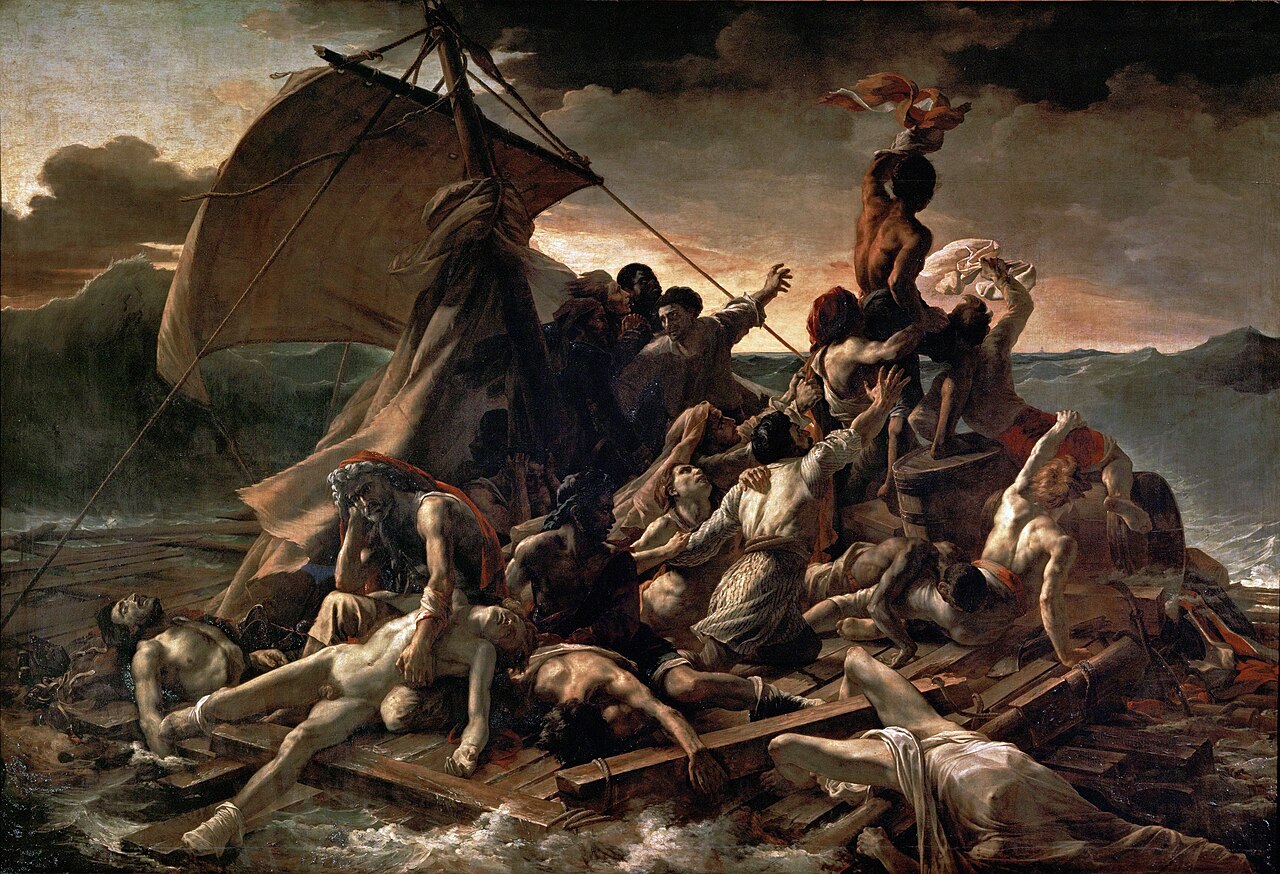
Géricault depicts the desperate survivors of the French frigate Méduse, which ran aground off West Africa in 1816. Of about 150 people cast adrift on a makeshift raft, only fifteen survived after thirteen days of starvation and violence. The pyramidal composition rises from the dead in the foreground to a figure waving a cloth toward a tiny rescue ship on the horizon.
Historical Context
The wreck became a national scandal because the incompetent captain had been appointed through royal favour. Géricault researched exhaustively, interviewing survivors, building a scale model of the raft and studying corpses in morgues. The result is a milestone of Romanticism, transforming a contemporary tragedy into a monumental history painting.
Provenance
Exhibited at the Salon of 1819, then held by the artist’s friends; acquired by the Louvre after Géricault’s death in 1824.
Details
- Medium
- Oil on canvas
- Dimensions
- 491 × 716 cm
- Department
- Paintings
- Period / Era
- Romantic
- Origin
- France
- Location in museum
- Denon Wing, First Floor — Room 700
About the Artist
Théodore Géricault
Théodore Géricault (1791–1824) was a pioneer of French Romanticism, known for his dynamic horse paintings and unflinching studies of human suffering. He died at only 32 after a riding accident, but his work deeply influenced Delacroix and later generations.