Near Eastern Antiquities
Stele of the Vultures
Sumerian sculptors of Lagash
c. 2450 BC
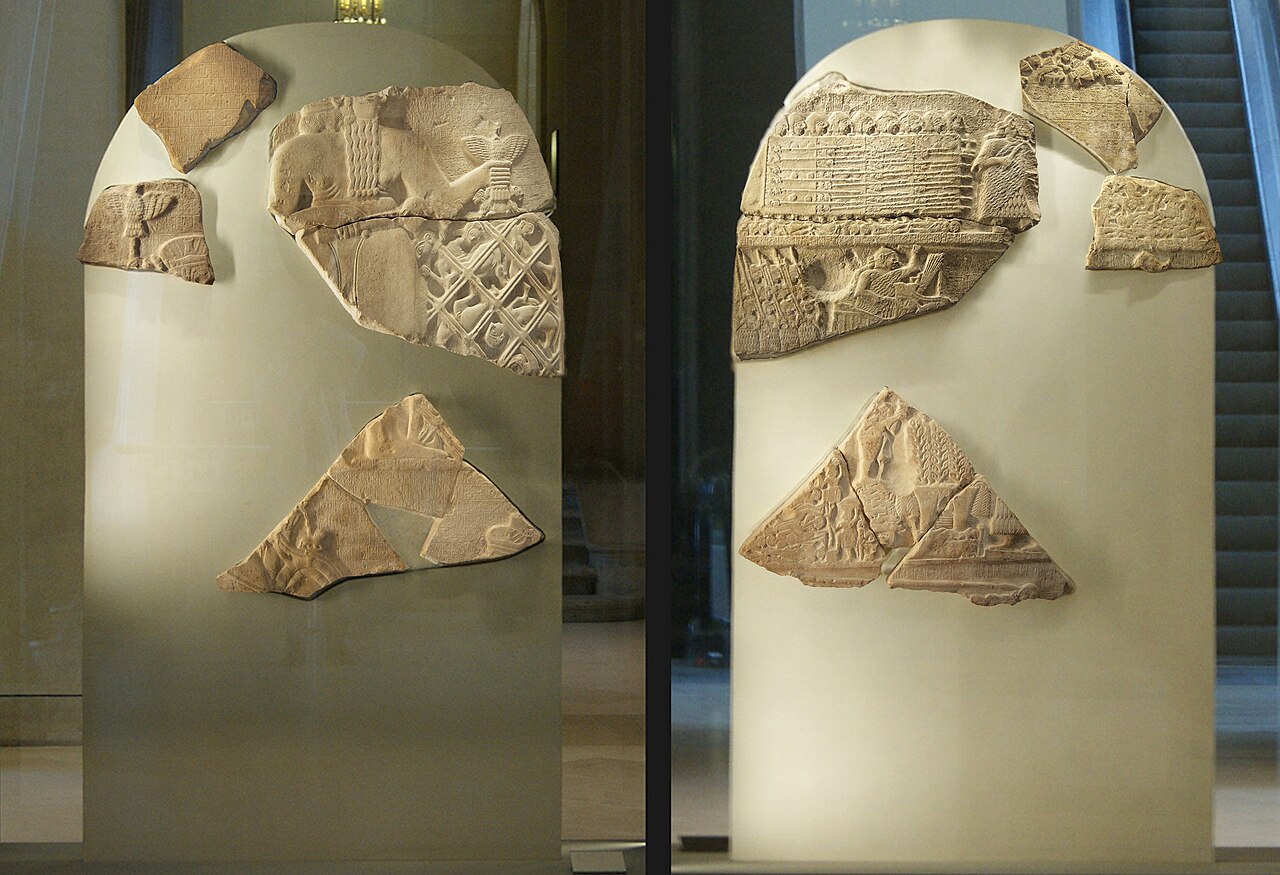
This fragmentary limestone stele commemorates a victory by King Eannatum of Lagash over the neighbouring city of Umma. One face shows vultures carrying away the severed heads of the defeated, giving the monument its name. Another shows the king leading a phalanx of helmeted soldiers over the bodies of the enemy, one of the earliest depictions of organised warfare.
Historical Context
The monument records a border dispute settled by force, with a cuneiform inscription describing the conflict and its oaths to the gods. It provides key evidence for the early Sumerian city-states and their rivalries. The surviving fragments are a foundational work of Mesopotamian art and history.
Provenance
Discovered in fragments at Tello (ancient Girsu) in southern Iraq by Ernest de Sarzec in the 1880s and brought to the Louvre.
Details
- Medium
- Limestone
- Dimensions
- Largest fragment approx. 180 cm high
- Department
- Near Eastern Antiquities
- Period / Era
- Ancient
- Origin
- Mesopotamia (Lagash, present-day Iraq)
- Location in museum
- Richelieu Wing, Ground Floor — Mesopotamian galleries
About the Artist
Sumerian sculptors of Lagash
The sculptors of Lagash worked for the city’s rulers and are anonymous. Eannatum, who commissioned the stele, was a powerful ruler of Lagash in the Early Dynastic period who briefly extended his rule over much of Sumer.