Paintings
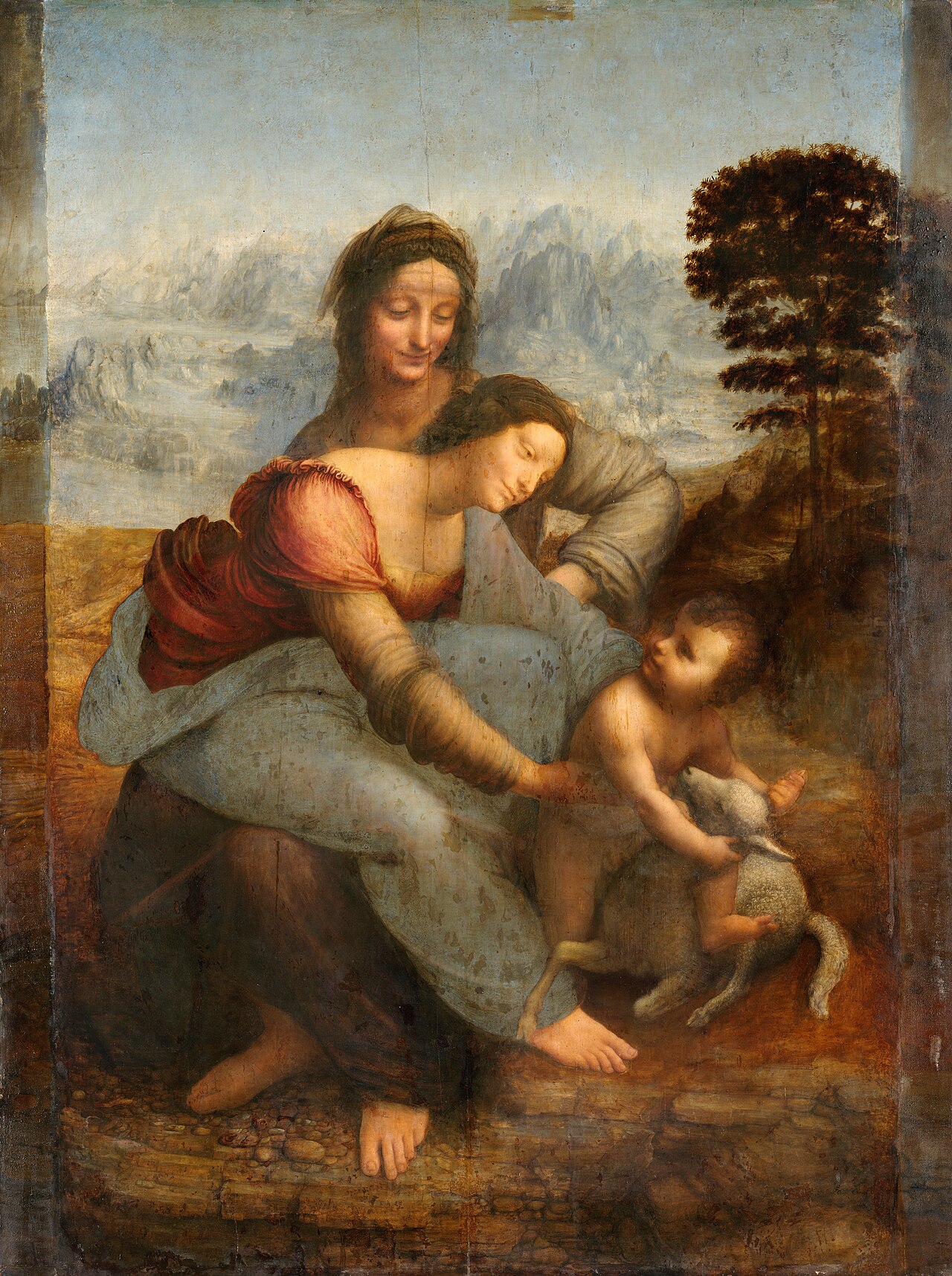
The Virgin and Child with Saint Anne
Leonardo da Vinci
c. 1503–1519
Saint Anne, the Virgin Mary and the Christ Child form an interlocking triangular group set in a dreamlike mountainous landscape. Mary leans forward from her mother’s lap to restrain the Child, who grasps a lamb, an allusion to his future Passion. The painting exemplifies Leonardo’s harmonious composition and his sfumato modelling.
Historical Context
Leonardo worked on this theme for many years, producing sketches and a famous cartoon now in London. The painting was left unfinished at his death, and later conservation has shown its glowing atmosphere and misty distances. It was among the works Leonardo brought with him to France.
Provenance
Found in Leonardo’s possession at Clos Lucé, then acquired by King Louis XIII through Cardinal Richelieu in 1629 and integrated into the royal collection.
Details
- Medium
- Oil on poplar panel
- Dimensions
- 168 × 112 cm
- Department
- Paintings
- Period / Era
- Renaissance
- Origin
- Italy / France
- Location in museum
- Denon Wing, First Floor — Grande Galerie
About the Artist
Leonardo da Vinci
Leonardo da Vinci (1452–1519) ended his career in France under the patronage of Francis I, who housed him at the manor of Clos Lucé near Amboise. The three paintings he took there, including this one, now form the core of the Louvre’s Leonardo collection.