Near Eastern Antiquities
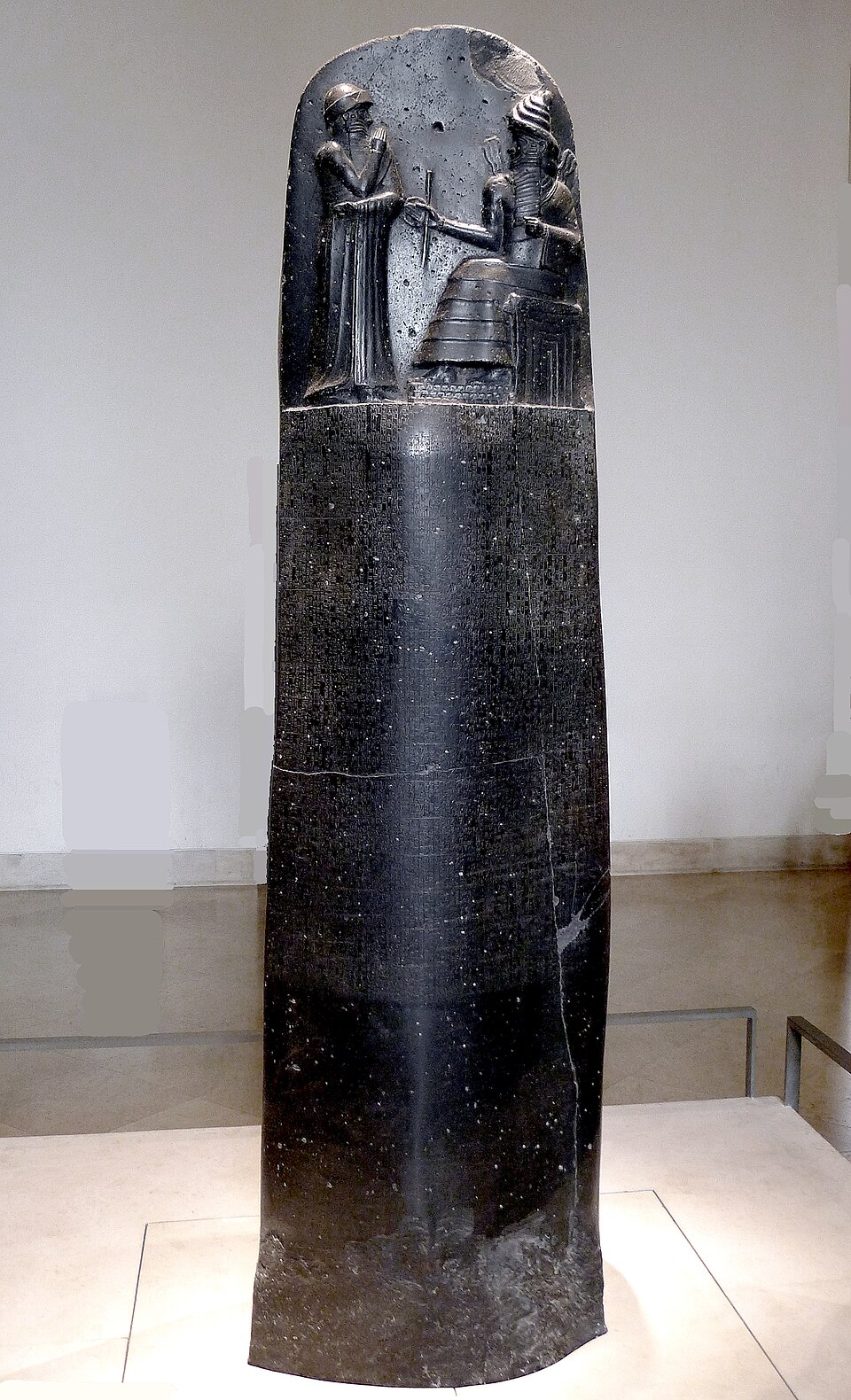
Code of Hammurabi Stele
Babylonian scribes
c. 1792–1750 BC
This towering black basalt stele carries one of the earliest and most complete legal codes in history, inscribed in Akkadian cuneiform. Around 282 laws cover trade, property, family and crime, often based on principles of proportional retribution. At the top, a relief shows King Hammurabi standing before the sun god Shamash, the deity of justice.
Historical Context
Hammurabi, sixth king of Babylon, had the code set up to proclaim his role as a just ruler chosen by the gods. The stele was taken as war booty to Susa in Elam in the twelfth century BC. Its rediscovery in 1901 offered an unprecedented insight into Babylonian society.
Provenance
Discovered in 1901–1902 at Susa, Iran, by a French archaeological expedition led by Jacques de Morgan, and transferred to the Louvre.
Details
- Medium
- Basalt
- Dimensions
- Approx. 225 cm high
- Department
- Near Eastern Antiquities
- Period / Era
- Ancient
- Origin
- Mesopotamia (Babylon)
- Location in museum
- Richelieu Wing, Ground Floor — Room 227
About the Artist
Babylonian scribes
Hammurabi (r. c. 1792–1750 BC) unified much of Mesopotamia under Babylonian rule. The scribes and artisans who carved this stele remain anonymous, but their work created one of the most influential documents of the ancient world.