Paintings
Pierrot (formerly Gilles)
Jean-Antoine Watteau
c. 1718–1719
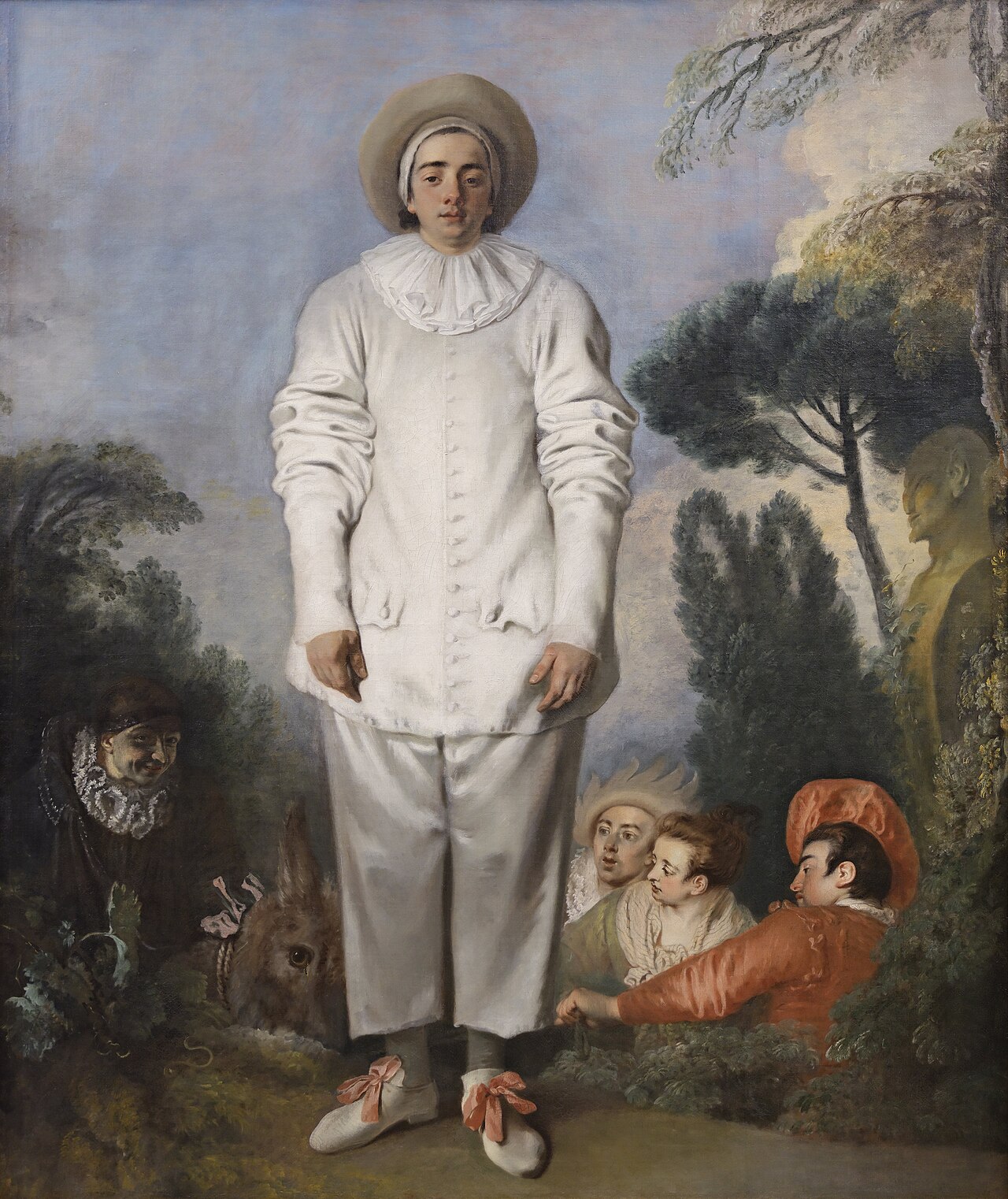
A life-sized Pierrot, dressed in loose white satin, stands frontally and gazes out with a wistful, ambiguous expression. Behind him, other characters of the commedia dell’arte, including a doctor on a donkey, seem to belong to a different world. The mixture of comedy and melancholy has made this one of the most haunting paintings of the eighteenth century.
Historical Context
The painting’s original purpose is uncertain; it may have been a sign for a café run by a former actor. Watteau, who developed the fête galante genre, often blurred theatre and real life. The picture was long called Gilles, though the character is now understood as Pierrot.
Provenance
Passed through various private collections in the eighteenth and nineteenth centuries and was bequeathed to the Louvre by Dr. La Caze in 1869.
Details
- Medium
- Oil on canvas
- Dimensions
- 184.5 × 149.5 cm
- Department
- Paintings
- Period / Era
- Baroque & Rococo
- Origin
- France
- Location in museum
- Sully & Richelieu Wings, Upper Floors — French paintings galleries
About the Artist
Jean-Antoine Watteau
Jean-Antoine Watteau (1684–1721) was a Flemish-born French painter who founded the Rococo fête galante style. He died of tuberculosis at 36, yet his poetic scenes of elegant leisure and theatre profoundly shaped eighteenth-century art.